
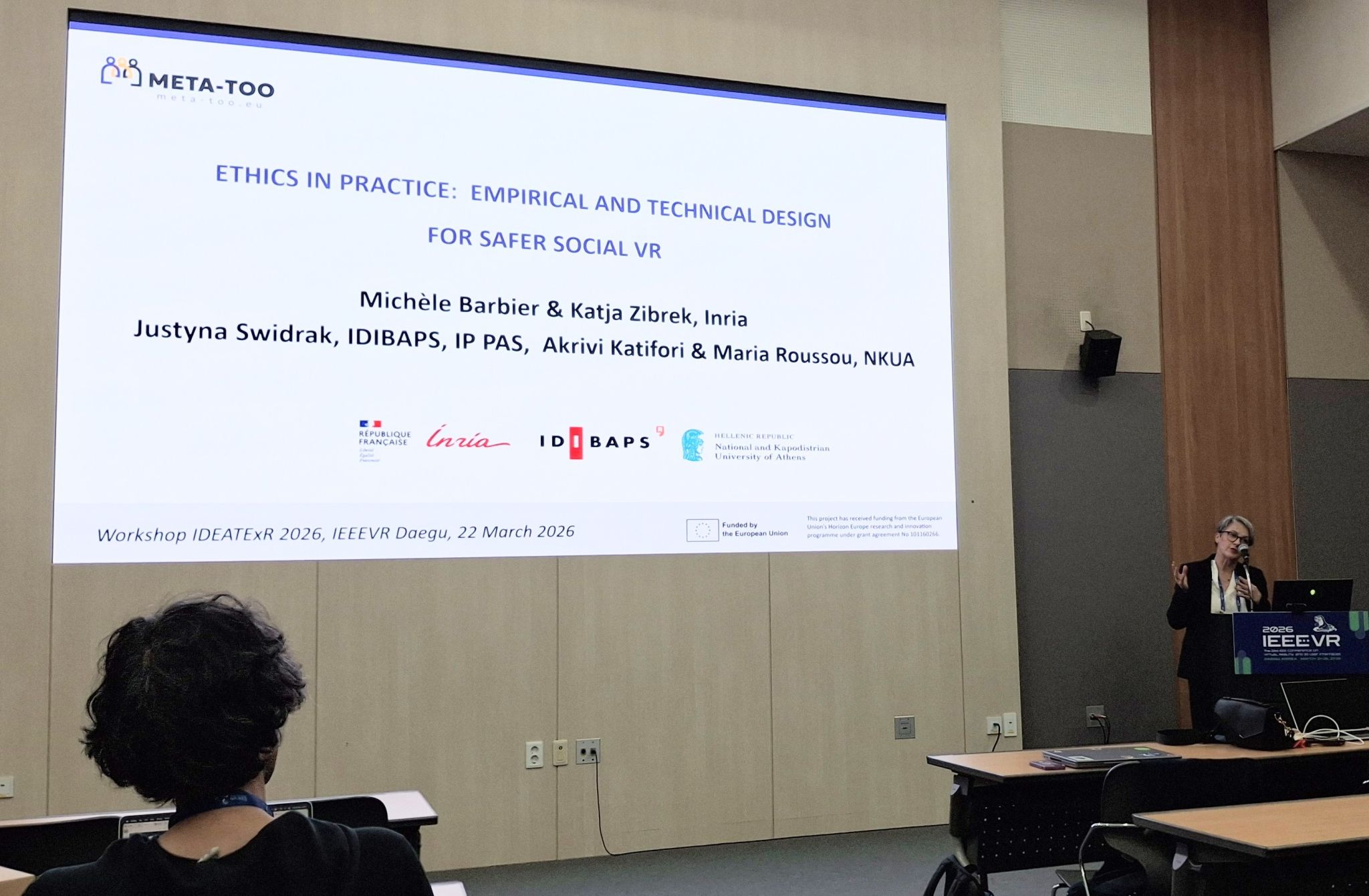
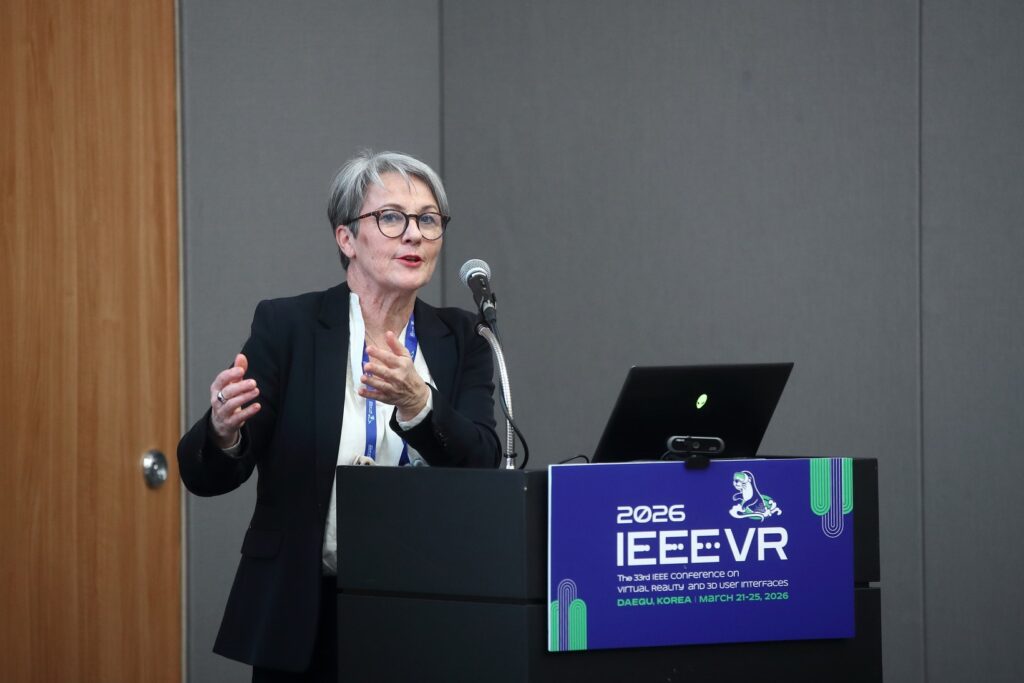
At IEEE VR 2026 in Daegu, the Horizon Europe project META-TOO contributed to an important discussion on ethics in immersive technologies during the 5th IDEATExR Workshop (Inclusion, Diversity, Equity, Accessibility, Transparency and Ethics in XR).
The session, led by Michèle Barbier and Katja Zibrek from Inria, addressed a central challenge in XR research: how to study harassment in virtual reality without exposing participants to harm.
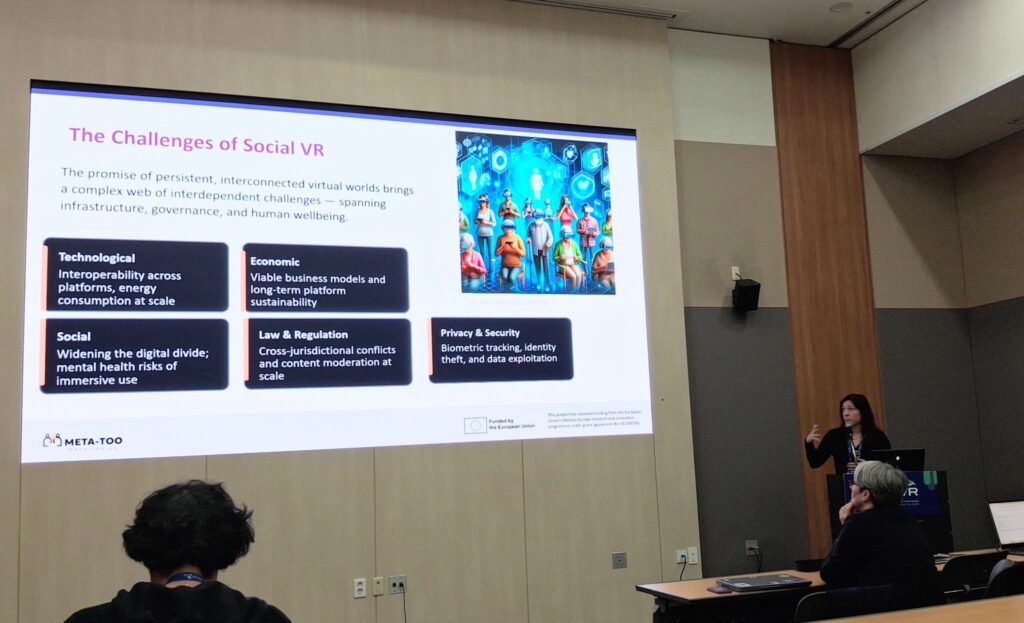
Structuring Ethical VR Research
The workshop brought together 20 researchers and practitioners from psychology, computer science, and ethics. Discussions focused on three core areas essential to responsible experimentation in social VR.
Participant safety emerged as a primary concern. Researchers emphasized the need to carefully select participants, particularly when involving potentially vulnerable groups, and to monitor stress levels without inducing distress.
Ethical scenario design was identified as equally critical. Participants highlighted the importance of creating realistic experimental conditions while avoiding stereotypes and minimizing the risk of retraumatization.
Support mechanisms were also discussed as a necessary component of any study. This includes robust informed consent procedures, clear communication of risks, and access to support both during and after participation.
From Technical Possibility to Ethical Responsibility
A key conclusion of the session was the principle of “collective restraint.” While immersive technologies allow increasingly realistic simulations, participants agreed that not all technically feasible studies are ethically justified.
This perspective reflects a broader shift in the field: from reacting to harmful behaviors after they occur to proactively designing systems and research protocols that protect users’ dignity and mental well-being.
Research Contributions from META-TOO
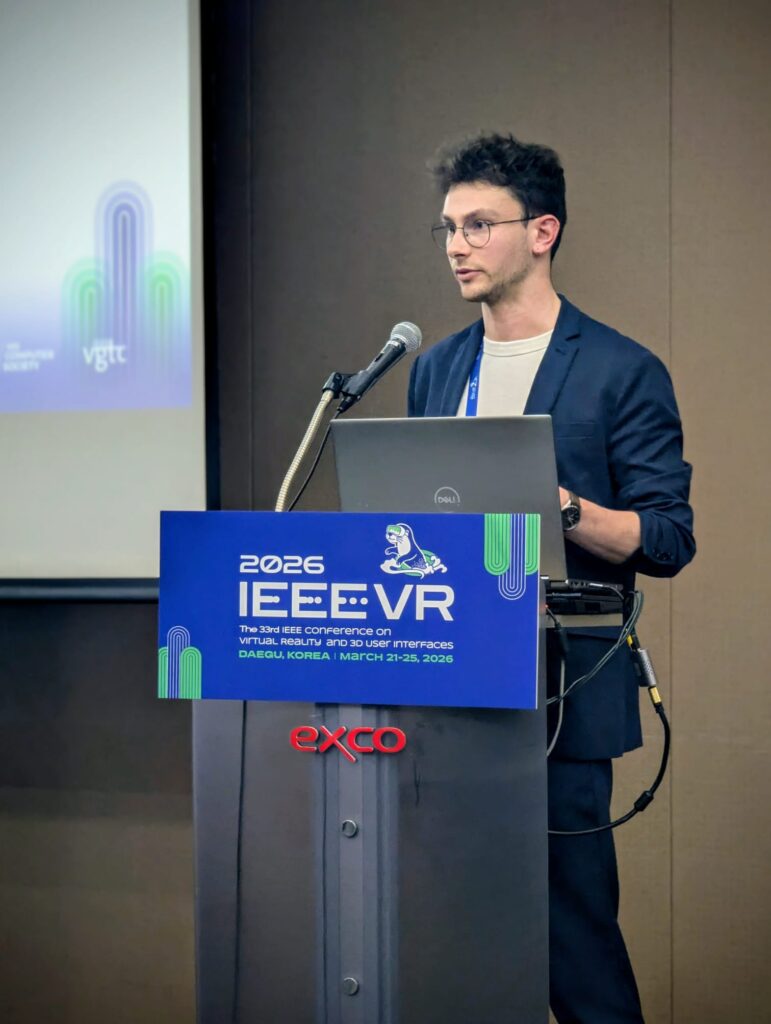
In parallel with the workshop, Arthur Audrain presented ongoing research conducted within META-TOO at IEEE VR 2026.
His work examines user interactions in social VR platforms such as VRChat and Rec Room, with the aim of improving inclusivity and safety.
A central contribution of this research is the development of a taxonomy of safety tools. By systematically analyzing existing features across platforms, this work provides a structured foundation for designing more effective and user-centered safety mechanisms in virtual environments.
The paper is available here: https://inria.hal.science/hal-05504611v1
Towards Safer Social Virtual Environments
The IDEATExR workshop highlighted the importance of interdisciplinary collaboration in addressing the ethical challenges of XR. Contributions from META-TOO demonstrate how European research is helping to define standards for safer, more inclusive virtual spaces.
Funded under Horizon Europe, META-TOO continues to advance knowledge at the intersection of technology, ethics, and human-centered design, supporting the development of social VR environments that prioritize user safety and well-being.